Advanced Course on Active and Passive Direct Cooling of Windings in Electrical Machines

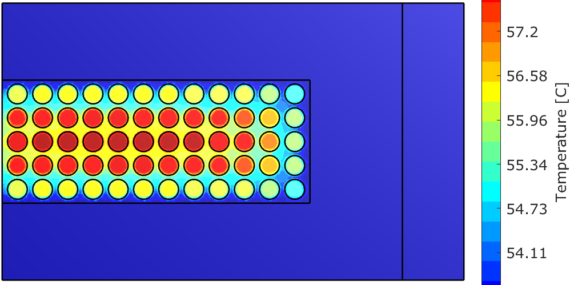
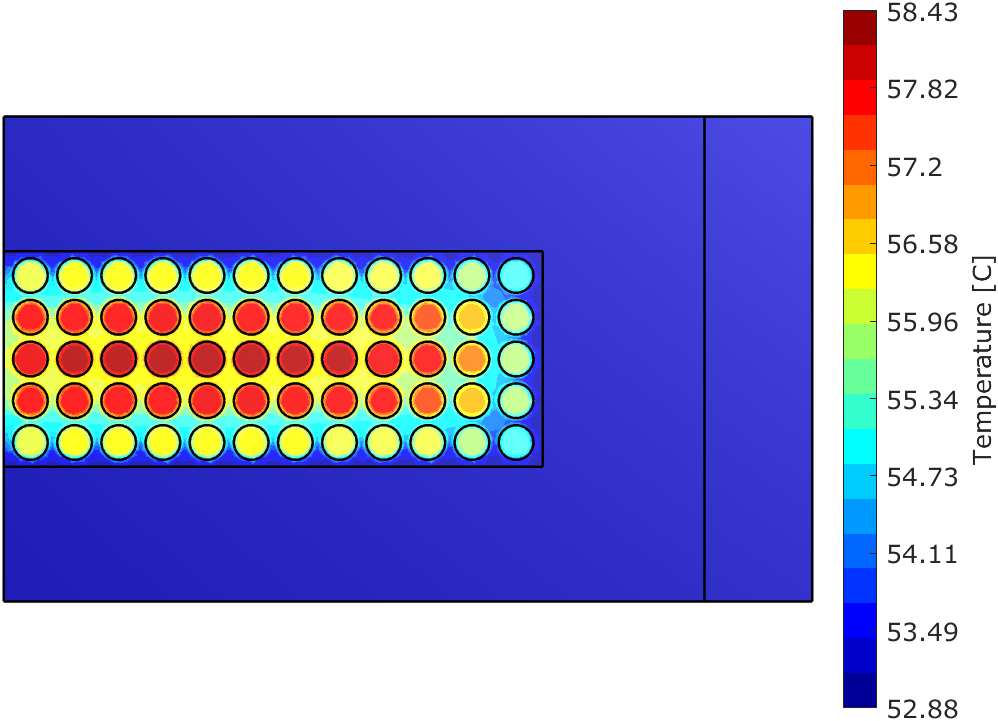
Abstract: Precise temperature prediction in the thermal analysis of electrical machines relies heavily on highly accurate slot modeling. To achieve this level of detail, the computational model must meticulously mirror the physical reality of the motor by representing the windings on a wire-by-wire basis. Furthermore, every layer of insulative material within the slots must be

Advanced Course on Thermal Analysis and Design of Axial-Flux Electrical Machines

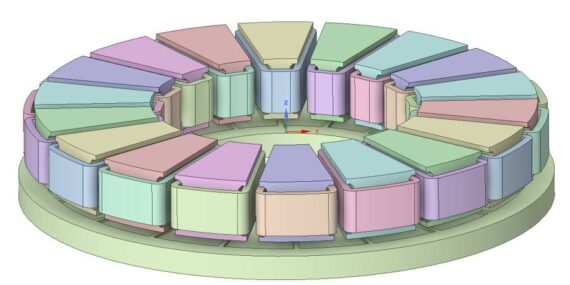
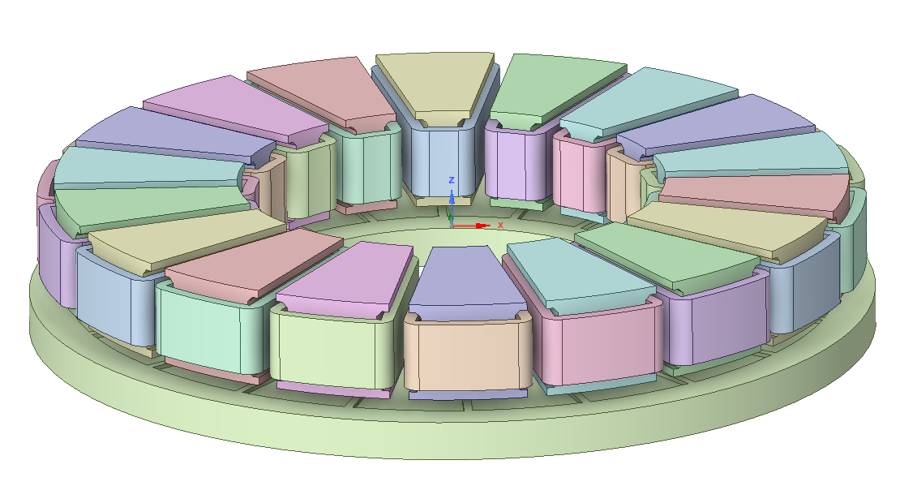
Abstract: This course covers the thermal analysis and design of an axial-flux electric machine of your choice using a powerful dual-method approach. The study begins with the development of an analytical model, namely a Lumped Parameter Thermal Network (LPTN), which is then implemented in MATLAB. Subsequently, the LPTN results are validated against numerical simulations, including

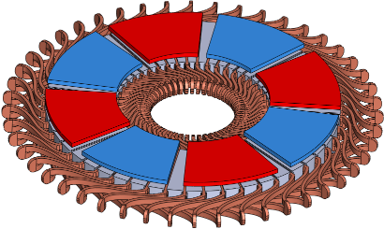
Advanced Course on Design of a Fault-Tolerant Axial-Flux PM Motor with Core-Less Winding

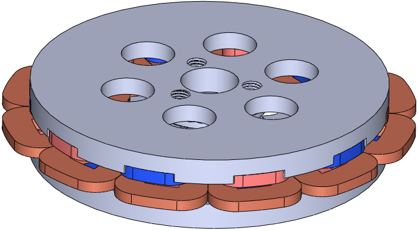
The electrification of aerospace and unmanned aerial vehicle (UAV) systems has fundamentally shifted the operational demands placed on electric motors, making reliability a strict necessity rather than a mere asset. In these high-stakes environments, an unexpected motor failure can lead to catastrophic system loss, driving an urgent need for fault-tolerant propulsion architectures that can sustain

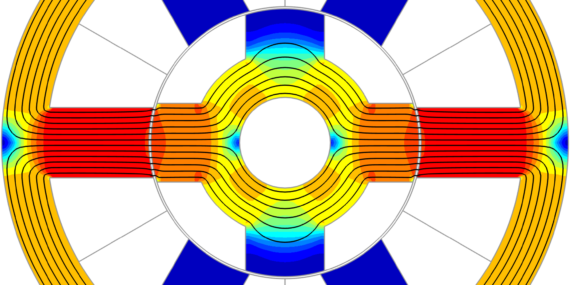
Magnetic Equivalent Circuit (MEC) Analysis of Radial-Flux Permanent Magnet Motors

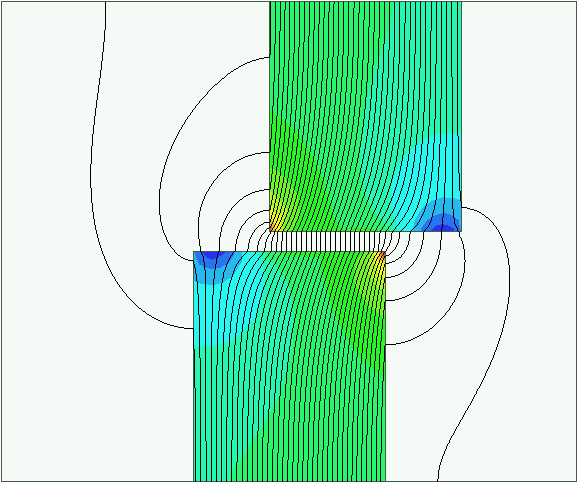
This course offers an in-depth exploration of the magnetic equivalent circuit (MEC) derivation for radial-flux permanent magnet (PM) motors. Attendees will learn how to develop a custom non-linear MEC solver to perform both magnetostatic and transient simulations. Furthermore, the course provides a comprehensive comparison between MEC and finite element analysis (FEA), ensuring a rigorous validation

Magnetic Equivalent Circuit (MEC) Analysis of Axial-Flux Permanent Magnet Motors

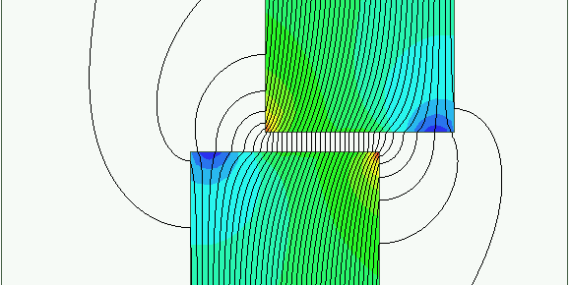
This course offers an in-depth exploration of the magnetic equivalent circuit (MEC) derivation for axial flux permanent magnet (AFPM) motors. Attendees will learn how to develop a custom non-linear MEC solver to perform both magnetostatic and transient simulations. Furthermore, the course provides a comprehensive comparison between MEC and finite element analysis (FEA), ensuring a rigorous

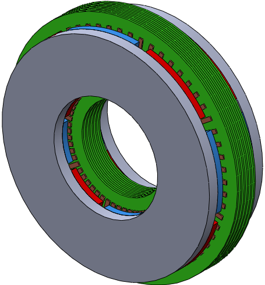
Advanced Course on Design of Axial-Flux PM Motors with ISDW

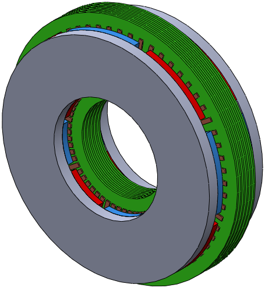
This course covers the analytical design and finite element analysis (FEA) of axial-flux permanent magnet (AFPM) motors featuring integral-slot distributed windings. We provide comprehensive case studies for various configurations, including double-rotor, double-stator, and single-rotor single-stator structures. Register This Course Here Register This Course Here

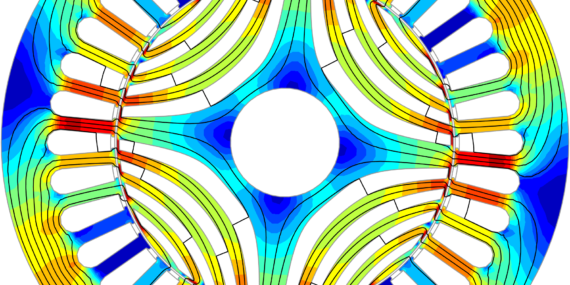
Finite Element Analysis of Synchronous Reluctance Motors Using EMDLAB

In this course, we analyze two synchronous reluctance motor case studies and derive their complete performance characteristics using finite element analysis in EMDLAB. The first benchmark is a pure synchronous reluctance motor (SynRM), and the second is a permanent-magnet-assisted synchronous reluctance motor (PMa-SynRM). Register This Course Here Contents: Discussion on target motors. How to create

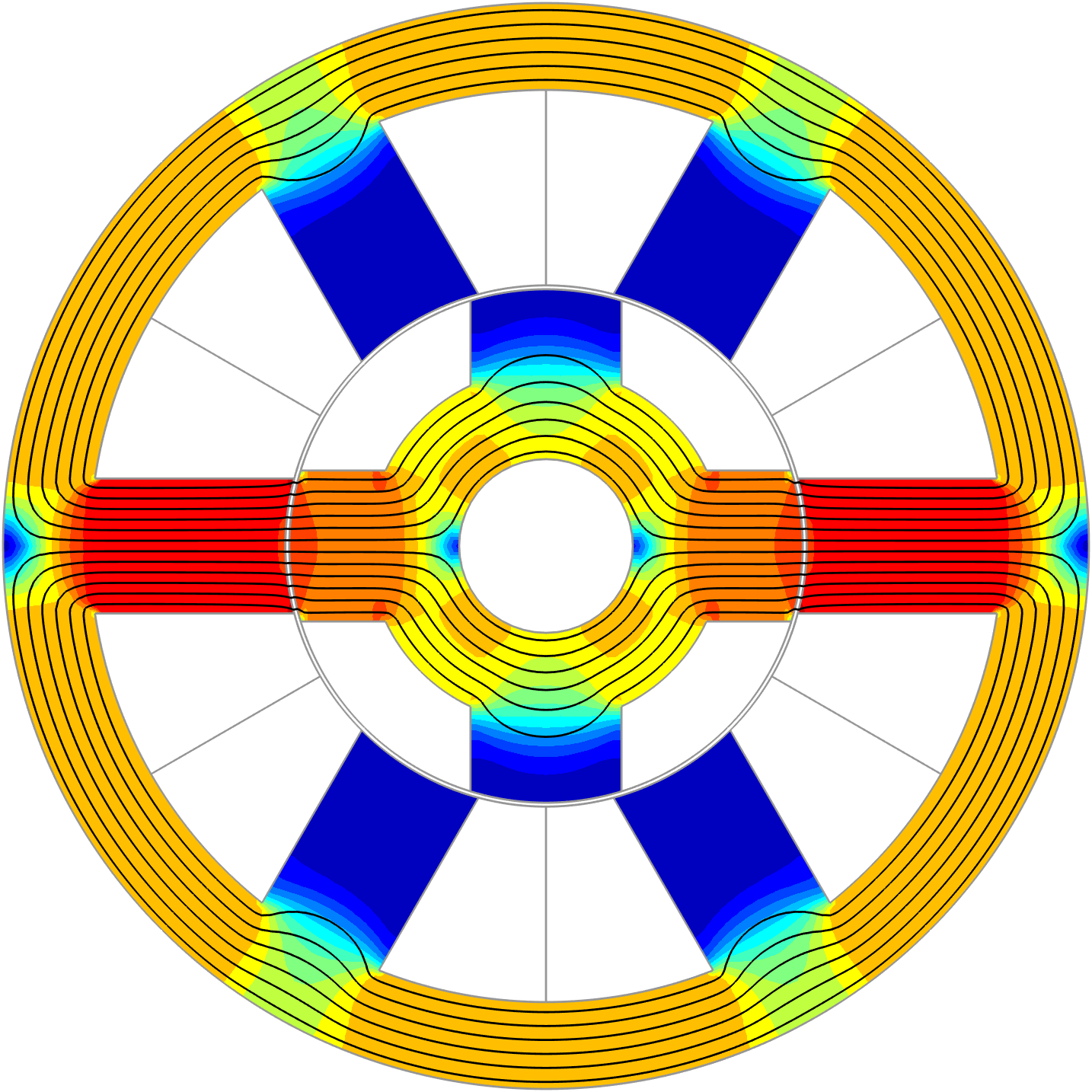
Finite Element Analysis of Switched Reluctance Motors Using EMDLAB

In this course, we learn how to perform finite element analysis of two benchmark switched reluctance motors using EMDLAB within the MATLAB environment. The first benchmark is an inner-rotor SRM, and the second is an outer-rotor SRM. The main objective is to compute a complete set of motor performance characteristics, including static torque curves, flux

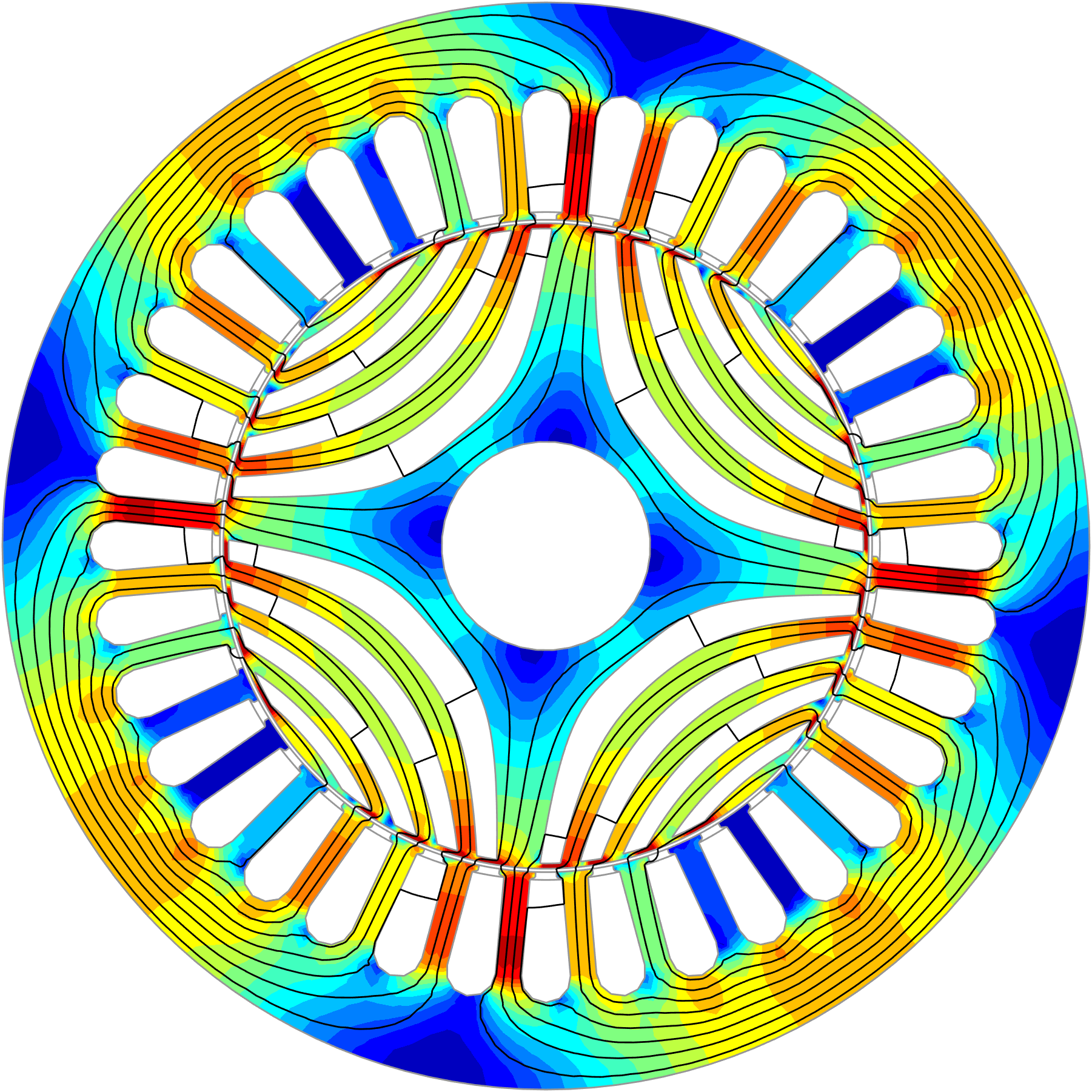
Finite Element Analysis of Induction Motors Using EMDLAB

In this course, we will learn how to perform finite element analysis of three-phase induction motors using EMDLAB. Two induction motor case studies are presented, and their complete performance characteristics are derived through finite element analysis in EMDLAB. The first case study is a 0.75 kW Siemens motor, and the second case study is a