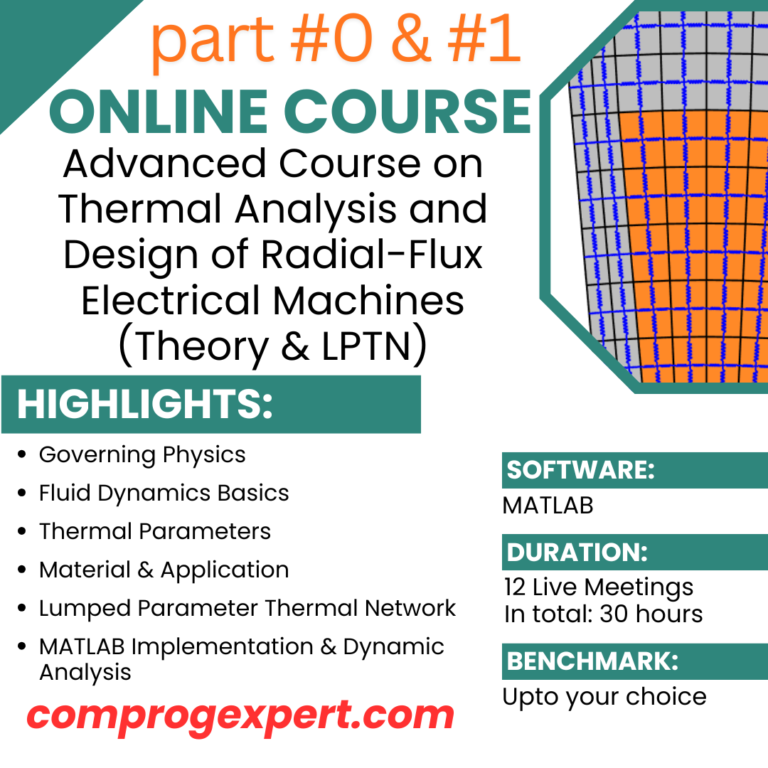
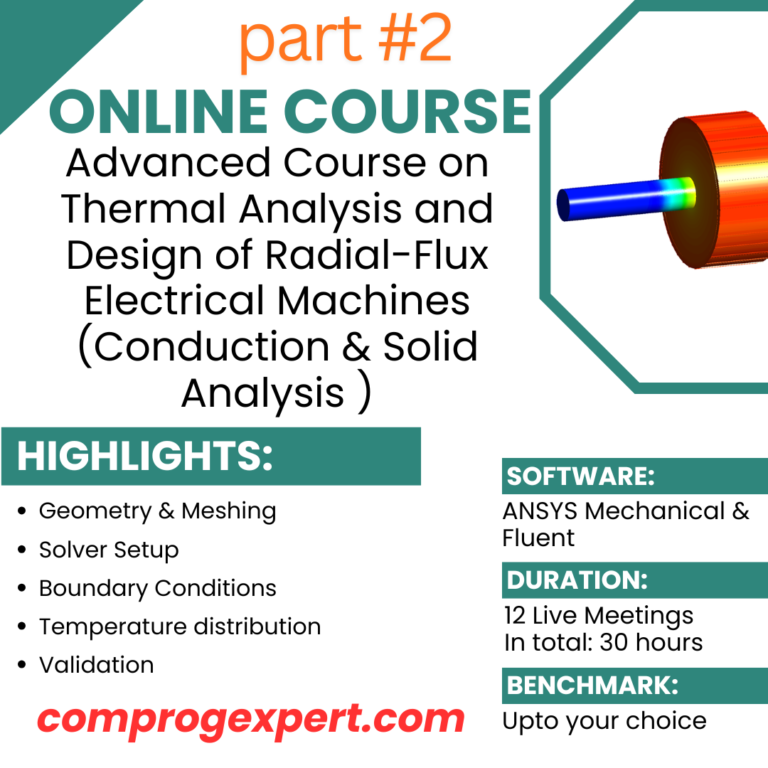
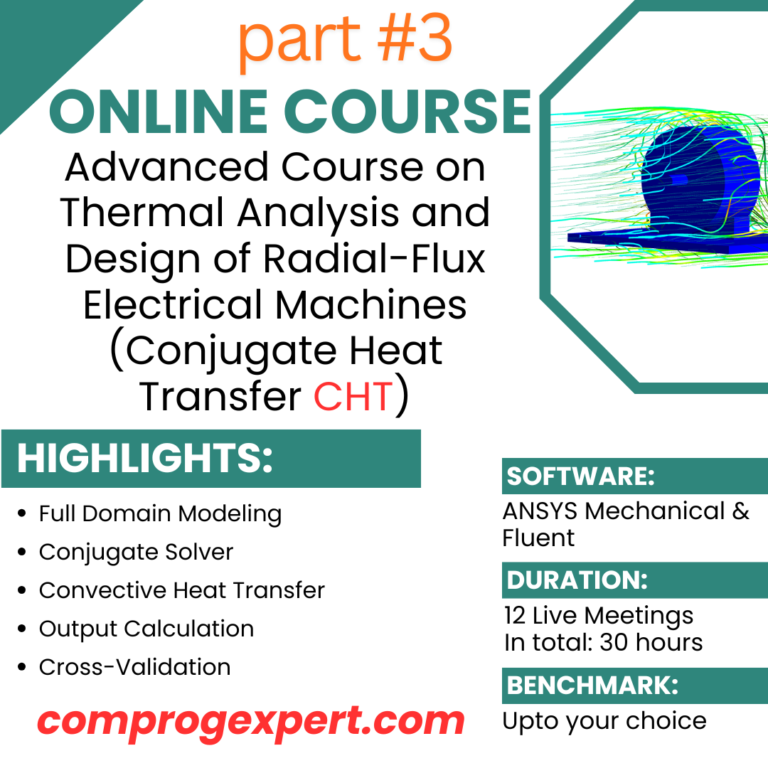
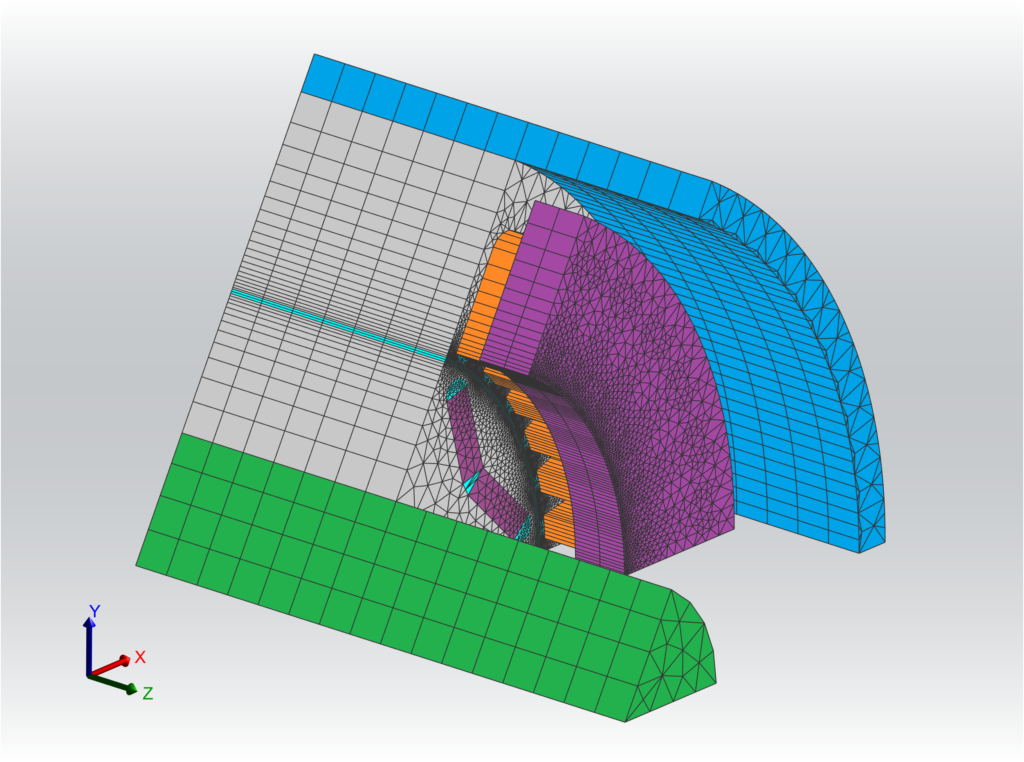
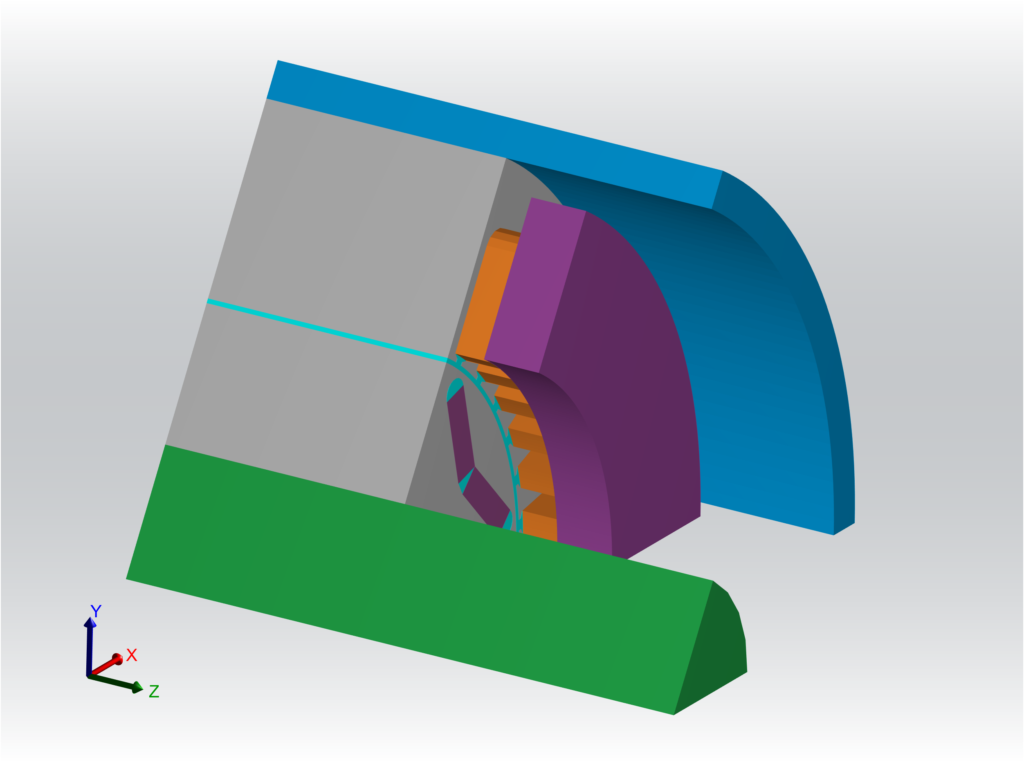
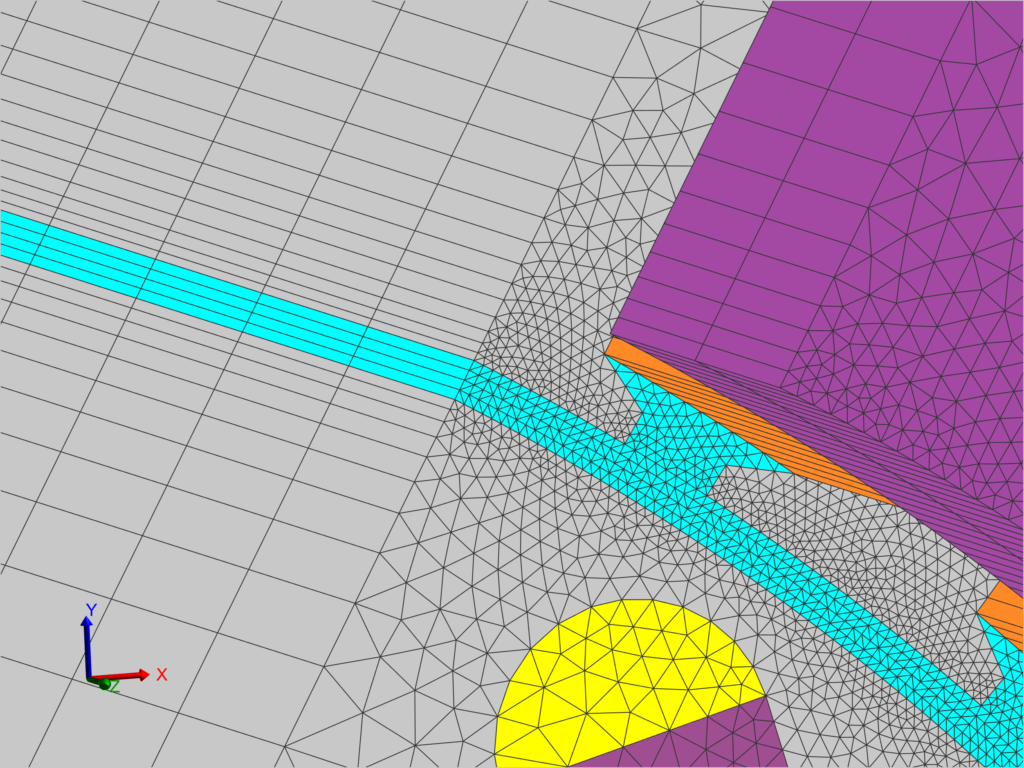
This course covers the thermal analysis and design of a radial-flux electric machine of your choice using a powerful dual-method approach. The study begins with the development of an analytical model, namely a Lumped Parameter Thermal Network (LPTN), which is then implemented in MATLAB. Subsequently, the LPTN results are validated against numerical simulations, including the Finite Element Method (FEM) and Computational Fluid Dynamics (CFD), performed in ANSYS Workbench using ANSYS Mechanical and ANSYS Fluent. For a more comprehensive analysis, the heat transfer coefficients calculated from the CFD simulations are also integrated back into the LPTN model, enabling rigorous cross-validation between the LPTN and CFD results.
Governing Physics: Understanding heat transfer modes (Conduction, Convection, Radiation), the Fourier Equation, and the Energy Equation.
Fluid Dynamics Basics: Introduction to CFD, Laminar vs. Turbulent flow regimes, and defining boundary conditions.
Thermal Parameters: Deep dive into the Nusselt number, Heat Transfer Coefficient (h), thermal conductivity, and emissivity.
Material & Application: Study of potting materials, high-emissivity coatings to increase heat transfer, and standard cooling techniques (natural vs. forced convection).
Lumped Parameter Thermal Network (LPTN):
Theoretical Deduction: Transitioning from continuous Energy Equations to discrete LPTN space. Defining nodes, State-Space equations, and Thermal Resistance/Capacitance.
Advanced Modeling: Handling heat transfer in complex regions like the Airgap and end spaces.
Input Definitions: Applying power losses as input sources and modeling cooling method impacts.
Dynamic Analysis: Calculating thermal time constants and analyzing transient thermal performance.
MATLAB Implementation: Coding the full LPTN structure to solve for critical temperatures.
Geometry & Meshing: Creating the motor geometry and organized/disorganized meshing strategies for solid parts.
Solver Setup:Selecting the appropriate solver in ANSYS Fluent for conductive heat transfer.
Boundary Conditions: Applying convective terms in the air gap, end spaces, and environment using Heat Transfer Coefficients (h) rather than simulating the fluid.
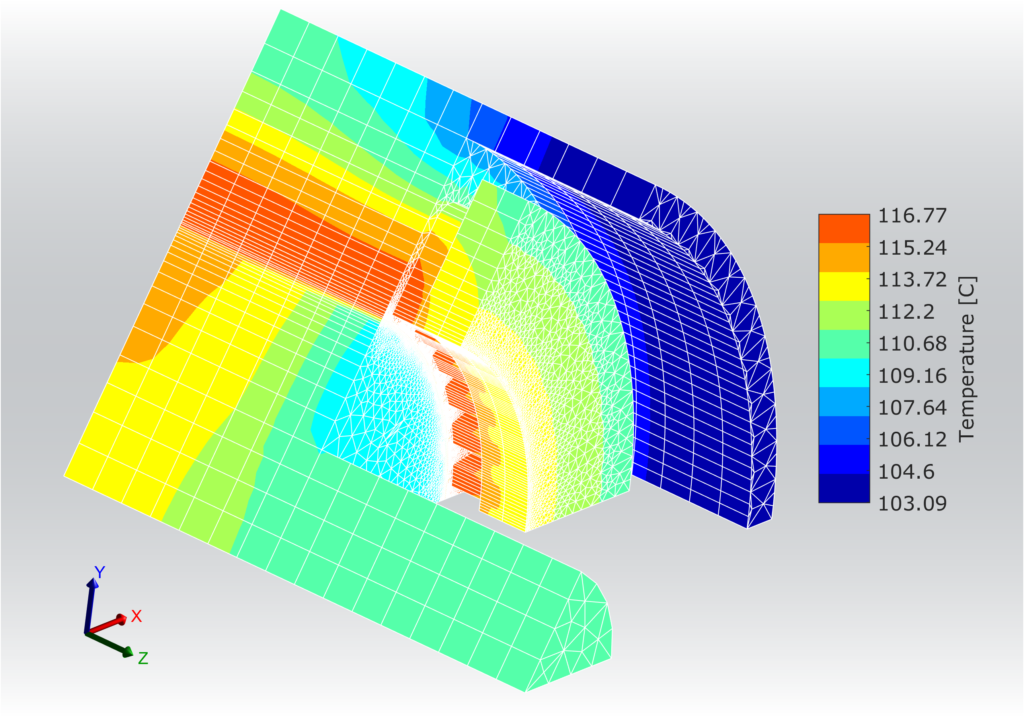
Temperature distribution: Analyzing the local hotspots and comparing them with the average temperature achieved.
Validation: Comparing these initial CFD thermal results against the LPTN model to validate the solid domain physics.